
Mystical Creatures: Exploring the Origins and Symbolism of Dragons

Updated: Aug 2
For centuries, dragons have mesmerized cultures worldwide with their awe-inspiring and fearsome presence. From ancient Eastern wisdom to Western tales of fire-breathing terror, these mythical creatures embody a kaleidoscope of symbolism — from wisdom and power to chaos and destruction. Discover the fascinating origins and meanings behind the mystical dragon.
The Ancient Origins of Dragons
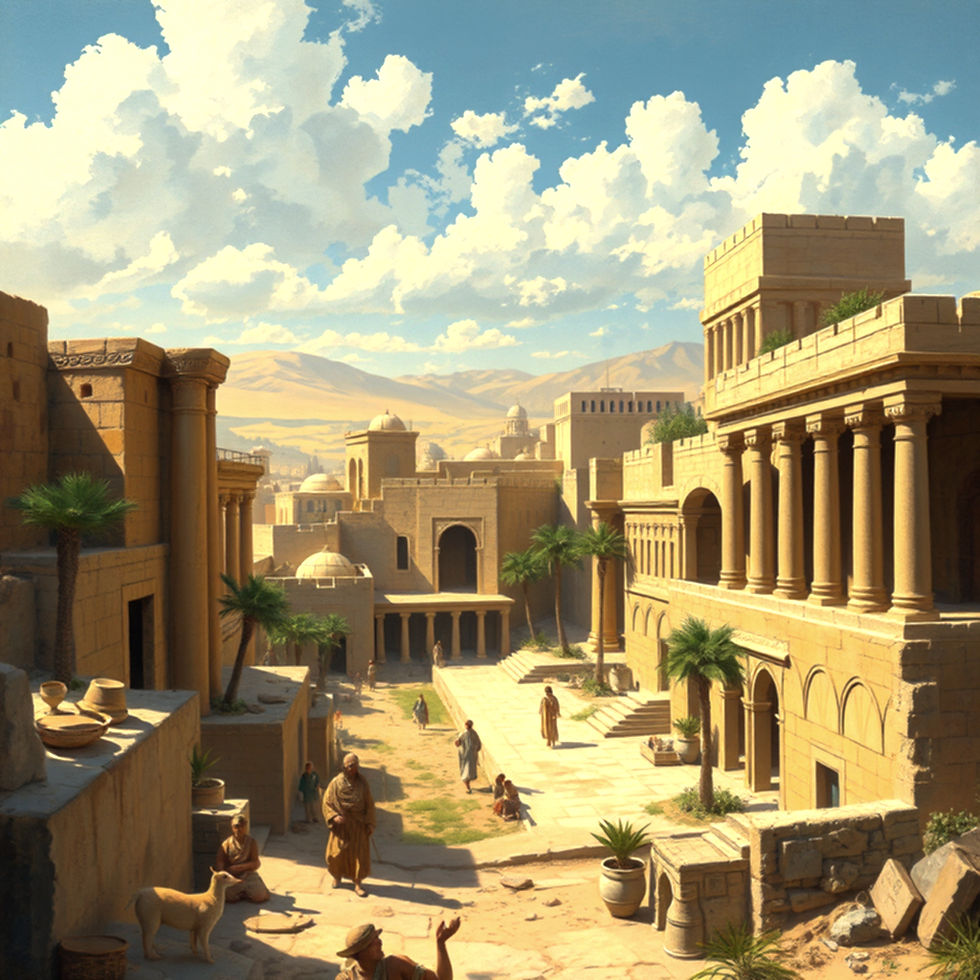
The roots of dragon mythology can be traced back to ancient civilizations of Mesopotamia and Babylon. In Mesopotamia, specifically in the Sumerian city-states of Ur and Uruk (modern-day Iraq), the concept of a powerful, serpent-like creature emerged around 4000-3000 BCE.
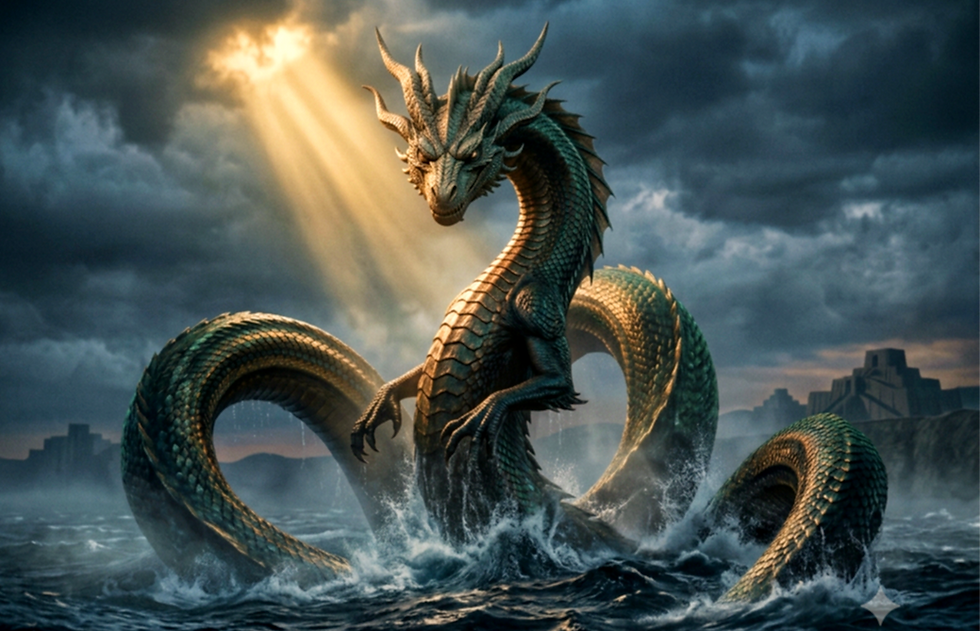
According to Mesopotamian mythology, Tiamat, the primordial sea goddess (the personification of salt sea) alongside her mate Apsu (the personification of fresh water), spawned a pantheon of monsters, only to spark a devastating war that would shape the cosmos. Tiamat is sometimes portrayed as a fierce serpent or a dragon, but her appearance is contested by some scholars. (1)

One of Tiamat's offspring is the mušḫuššu, a "magically-protective" snake-dragon often associated with kingship and fertility. Depicted in art as a fantastical creature with the head of a lion, neck and body of a snake, horns of a bull, and hind legs of a bird, the mušḫuššu represents the divine power of the Sumerian gods. He is seen as the animal sitting beside Marduk. (2)
Marduk, the chief god of the city of Babylon, defeats Tiamat in an epic battle, slaying her and forging the universe from her body. This pivotal myth transformed chaos into creation, setting the stage for the rise of civilization.
As Mesopotamian civilization evolved in Babylon (located in Iraq), around 2000 BCE, dragon-like creatures transformed into the mušmaḫḫū. This mušmaḫḫū monster is referred in mythological texts and depicted in art as a kind of dragon with seven long snake necks and heads. This creature may be the seven-headed hydra killed by the god Ningirsu or Ninurta, also referred to in spells. The usumgal, a serpentine monster, is used as a metaphor for a god or king in Sumerian poetry — more as a term of praise and not with negative connotations.
In Mesopotamian lore, dragons like the mušḫuššu and mušmaḫḫū played crucial roles in creation stories, battles between gods, and symbolize the forces of nature. The mušḫuššu inspired awe in its worshippers, who revered it as a symbol of royal power and cosmic balance. The dragons' multifaceted symbolism, representing both good and evil, influenced later mythological traditions, including those of ancient Egypt, Greece, and China.
Evolution of Dragon Lore
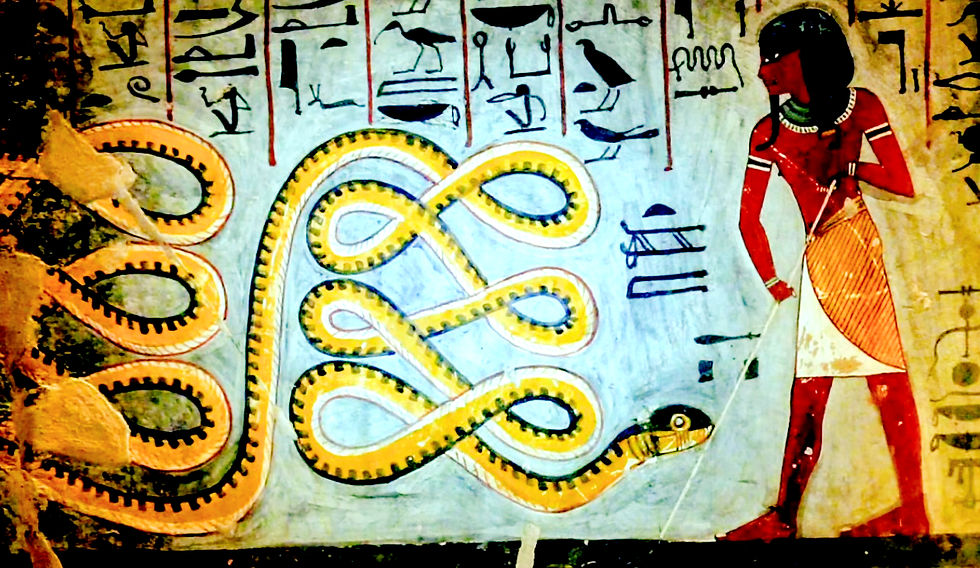
In ancient Egyptian mythology, Apep, a gargantuan serpent-like creature, emerged during the 8th dynasty (around 2180 BCE). Dubbed the "Serpent from the Nile" and "Evil Dragon," Apep resides in the underworld, embodying chaos and darkness.
Every night, according to myth, Ra, the sun
god, battles with Apep to ensure the continuation of the solar cycle and the ordering of the universe. (3) Apep uses his magical gaze to try overwhelming Ra. However, the sun god slains or binds Apep on a daily basis for the emergence of the sun, except when Apep temporarily escapes capture in solar eclipses.
Sobek is another dragon-like deity worshipped in Egypt as early as 2000 BCE. He had the head of a crocodile, which symbolized fertility, protection, and rebirth. Although not strictly a dragon, Sobek's association with the Nile and its life-giving waters made him a significant figure in Egyptian mythology.

In ancient Greece, we have tales of the colossal serpentine dragon Typhon fighting an epic battle with Zeus, and the legendary dragon Ladon guarding the golden apples in the Garden of the Hesperides.
As time progressed, the dragons in Western cultures morphed from serpentine beasts into fire-breathing, winged creatures — typically chaotic and destructive in nature and whose role was to guard treasure.
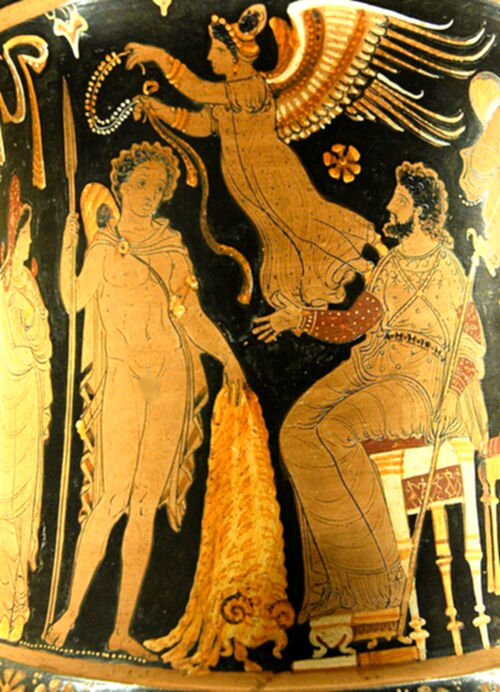
One central Greek myth tells of a dragon guarding the golden fleece in Jason and the Argonauts. Jason and his team of heroes called the Argonauts, were sent on a quest to Colchis by an usurping uncle Pelias the king of Iolcos, who hoped his nephew would be killed. Jason and his crew battled monsters and overcame many impossible tasks—one task being stealing the golden fleece from a sleeping dragon. By handing over the fleece, Jason secured his rightful heirship of the kingdom.
In Christian literature and artwork, dragons became synonymous with evil, malevolence, and destruction. During the medieval age in Europe, heroic stories emerged of a brave knight on horseback defeating a sinister serpent who demanded tribute or sacrifice in exchange for sparing a village.

This motif of a courageous hero vanquishing a serpentine creature evolved into the revered legend of St. George and the Dragon, which captivated medieval audiences. St. George was an actual Roman soldier who was executed around 303 CE for refusing to renounce Christianity. He became the hero who conquered the evil dragon to save the maiden.
Unlike their Western counterparts, Eastern cultures have revered dragons as benevolent serpentine creatures deeply connected to nature. These majestic beings are often associated with good fortune, prosperity, and wisdom in Asian traditions.

The Chinese dragon, known as the long, is a powerful symbol of the Emperor's authority and wisdom, also signifying the eternal cycles of life, death, and rebirth. The huanglong, or the Yellow Dragon, is symbolic of the fifth element Earth within the Chinese five-element mythological system (Wu Xing). The huanglong is considered a bringer of fertility and prosperity and has connection to imperial authority and the earthly domain.
In Japan, the ryū is revered for its connection to water and good fortune, serving as a guardian of the ocean and its inhabitants. Korean mythology features a majestic creature known as the yongwang, a powerful dragon king that ruled over the seas, skies, and harvests. Similarly, in Vietnamese culture, dragons are portrayed as wise guardians and protectors, often revered as ancestral figures who watched over their people and gave them farming knowledge.
See the related blog post for the distinctions between Western and Eastern dragons, Mystical Creatures: The Differences Between Western and Eastern Dragons — What Sets Them Apart?
Symbolism: Both Benevolent and Malevolent
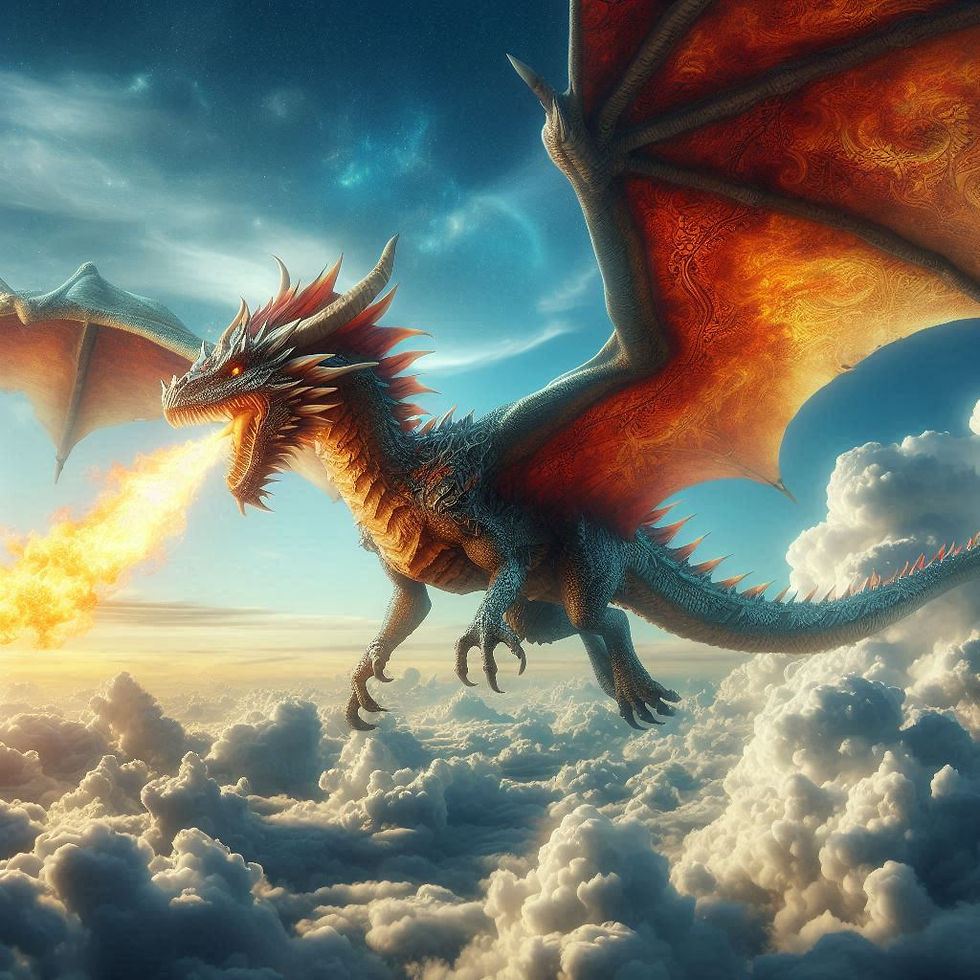
Dragons are multifaceted creatures whose symbolic interpretations vary dramatically across cultures. In the West, they are typically viewed as fearsome adversaries, embodying greed and destruction. Slaying a dragon often symbolizes overcoming formidable challenges or evil forces. This association can be seen in the St. George and the Dragon tale, where the dragon embodies a threat to society.

Contrastingly, in the East, dragons are revered as auspicious deities associated with water, rain, and agriculture. They are often seen as bringers of good fortune and are even considered ancestors of the imperial family in Chinese tradition. This duality of representation showcases the complex nature of dragon symbolism.
Dragons also occupy a prominent place in alchemical texts, where they often symbolize the primal forces that must be overcome before transformation and enlightenment can occur. The dragon thus becomes an emblem of the internal struggles we face on the path to self-realization.
Symbolism of Number of Dragon Claws

The number of claws on a dragon’s feet holds symbolic meaning in Eastern cultures and have a dual symbolism. Five claws represent the five earthly elements—wood, fire, earth, metal, and water—and symbolizes the emperor himself. Consequently, images of five-clawed dragons were revered as symbols of the emperor's power and glory.
The number of claws signified an individual's rank and social status in society. Ancient Chinese laws forbade people from lower classes from using five-clawed dragon motifs on clothing and on any drawing, unless given permission by the emperor, reserving this dragon depiction only for emperors. Lower-ranked officials, commoners, and the general public used only three-clawed dragons in their designs.

While five dragon claws held sway during certain dynasties, other periods saw a shift in this symbolic tradition. For example, Han dynasty drawings often featured dragons with only three claws, reflecting the evolving significance of claw numbers across different eras and dynasties.
In Japan, dragons typically are drawn with three claws. In Korea, Vietnam, and other Asian countries, dragons are commonly depicted as having four claws.
A Global Tapestry of Dragon Lore
Every culture has its unique spin on dragon lore, enriching the global narrative. In Viking mythology, dragons represented a fierce and noble spirit, often used as symbols for strength on battle standards. The Norse dragon Fafnir is particularly notable for symbolizing greed and the tragic consequences that come with it.

Similarly, Mesoamerican cultures revered the feathered serpent deity, Quetzalcoatl, blending dragon-like features with elements of nature and creation. Here again, we see the dragon as a symbolic force shaped by cultural values, serving various functions and meanings across different societies.
In Africa, dragons are depicted in various folktales, often serving as protectors or guides. The lesson of coexistence and respect towards these magnificent creatures reflects deeper values within African cultures.
The Dragon in Contemporary Symbolism
Today, dragons have become powerful symbols of transformation and change. Many businesses and brands utilize dragon imagery to convey strength, excellence, and dynamism. Dragons adorn logos from gaming to tech industries, evoking a sense of ambition and excitement.

In personal symbolism, many individuals identify with dragons as symbols of their inner strength or creative powers. For instance, the phrase “finding your inner dragon” has become popular, representing one’s pursuit of passion, confidence, and creativity.
The revival of interest in fantasy literature and films has only bolstered this connection, as many fans view dragons as inspiring representations of the extraordinary potential that lies within us.
Dragons in Literature and Pop Culture
Throughout history, dragons have been depicted memorably in literature and folklore. From J.R.R. Tolkien’s Smaug in The Hobbit to the fearsome dragons in George R.R. Martin’s Game of Thrones and House of Dragon, these creatures have become iconic figures in modern storytelling.
In literature, dragons often represent the archetypal guardian of treasure, wisdom, or hidden knowledge. Their fierce external forms contrast with the profound wisdom they often hold within. This duality of strength and enlightenment captivates readers, as it mirrors our own struggles between the primal and the enlightened parts of ourselves.

The Mesopotamian goddess, Tiamat, can be seen in modern pop culture, where she has evolved into a serpent or dragon, inspiring iconic characterizations like those in Dungeons & Dragons, where she appears as a five-headed draconic deity. In the movie Eternals (2021), Tiamat is a powerful "Celestial" deity, whose awakening would mark the destruction of the planet Earth and must be stopped to save humanity.
Furthermore, dragon imagery extends to contemporary media, from animated films like "How to Train Your Dragon" to the fantastical worlds of video games. They are often portrayed as complex characters, showcasing themes of friendship, loyalty, and even vulnerability. This development reflects society's evolving view of dragons—as beings worthy of empathy rather than mere enemies.
Concluding Remarks

The mystical dragon remains a compelling subject in both ancient mythology and modern culture. From guardians of treasures to symbols of personal transformation and finally, to wise protectors of the people, dragons continue to ignite our imaginations.
In understanding the diverse cultural interpretations of the dragon, we can uncover insights into the values of humanity itself, revealing the connections we share with these fantastical beasts.
Citations
Black, J. and Green, A. (1992). Gods, Demons and Symbols of Ancient Mesopotamia, An Illustrated Dictionary, London: The British Museum Press, p. 177.
Black and Green, pp. 129, 166.
Milligan, M. (Aug 26, 2022). The origins of dragon mythology, Heritage Daily, https://www.heritagedaily.com/2022/08/the-origins-of-dragons/144532


Comments